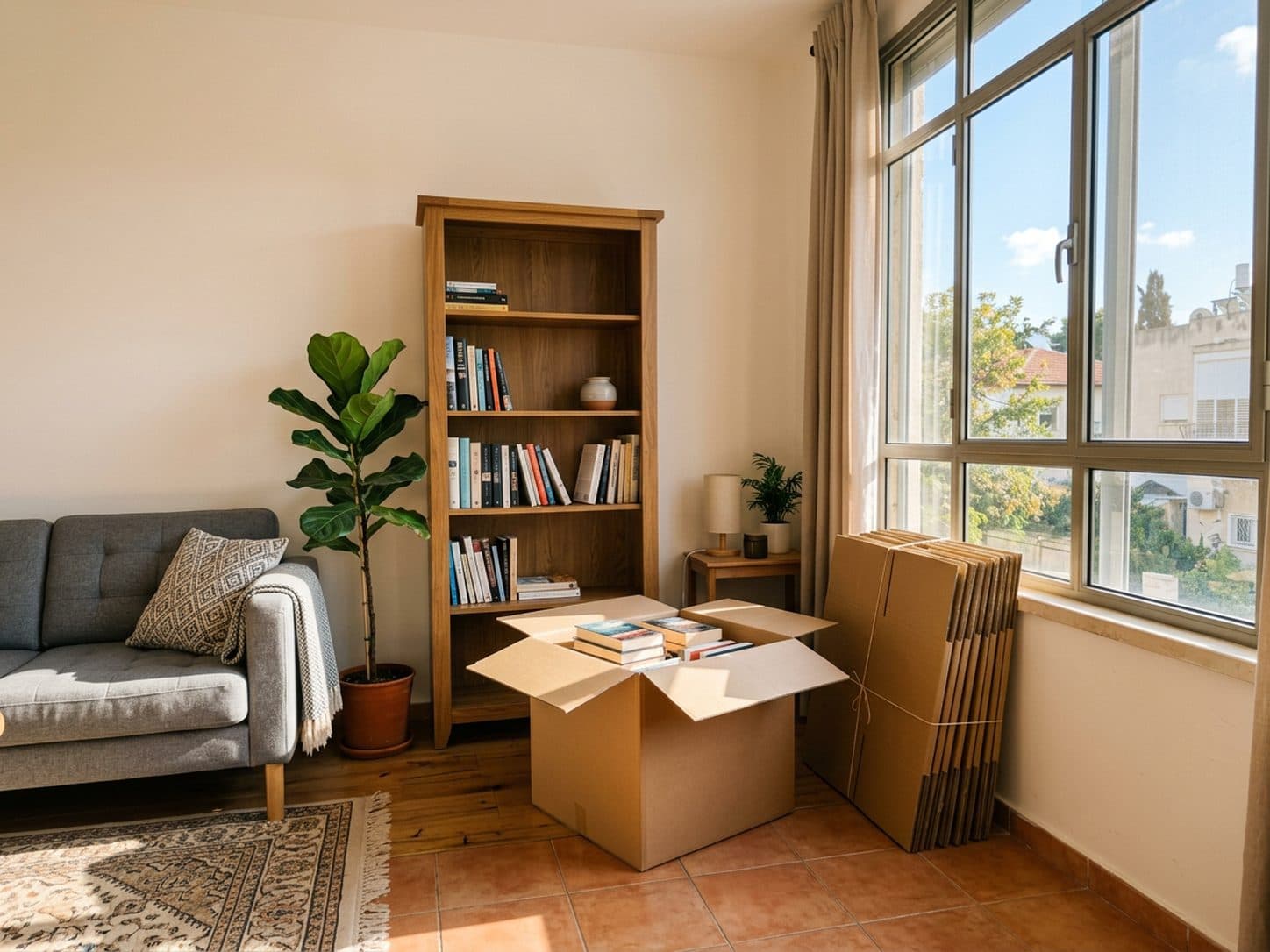
Quick answer: do not book the movers until you know, in writing, that you may take possession. In Israel that usually means the building has its Tofes 4, the approval that the building is complete and fit to be occupied, and that you have signed the handover protocol. Then ask the building committee or the management company three things: the rules for moving, how to book the service elevator, and where the truck can stand. Book all three before you give the movers a date.
Moving into a brand-new apartment is not like moving into a home that has been lived in. The building may still be finished around you, the elevator may be shared with many other families who got their keys the same month, and the paperwork has its own vocabulary. This guide explains what Tofes 4 means for a move, how to handle the handover and the meters, how the vaad bayit and building management affect your moving day, and how to book the elevator so the day runs on time. It is general information and not legal advice, so ask your own lawyer about your contract.
What Tofes 4 is, and why it matters to your move
Tofes 4 (Form 4) is the document issued by the local planning and building authority confirming that a building was completed according to its permit and is fit for occupation. In practice it is tied to connecting the building to the electricity and water networks on a permanent basis. People also talk about a completion certificate (teudat gemer) and about Tofes 5, and the exact documents, names and order of steps depend on the project and the permit, so do not assume that what a friend went through applies to you.
For a move, three consequences matter:
- Keys and dates. Your purchase contract may tie the handover and some payments to the building being ready. Ask your lawyer, or the developer in writing, which document you need before you move in.
- Utilities. Without a permanent connection you may be on temporary power or without services. Do not schedule a move for a day on which the apartment has no electricity or water.
- Early access. In some projects buyers are allowed in earlier to fit out the kitchen and closets. That access is for the contractors, not for your furniture. Bringing a household into a building that is not yet approved for occupation can cause problems with the developer, the bank or the authorities, so settle it with your lawyer first.
The handover and the protocol
The handover (mesira) is a walk-through with the developer or their representative, at the end of which you sign a protocol that lists the condition of the apartment and any defects. Do it before the movers are booked, and not on moving day. A few things to do:
- Go through every room with a flashlight and a phone camera. Check windows, shutters, balcony doors, the front door, light switches and sockets, tiles, and the air-conditioning points.
- Turn on every tap and flush every toilet. Look at the ceiling and the corners for marks.
- Photograph each defect close up and from a distance, and make sure it appears in the protocol before you sign.
- Consider bringing an independent home inspector (bodek bayit) to the walk-through. A trained eye catches what a buyer on a big day will miss.
- Take photos of the electricity, water and, if there is one, gas meters, with the numbers legible.
- Check that the parking space and storage room (machsan) numbers match your contract, that the mailbox has your name and that the intercom and entrance fobs work.
Israeli law gives buyers of new apartments from a developer certain rights during a defect-liability period. Which ones apply to you is a question for your lawyer.
The vaad bayit and the management company
In an Israeli apartment building, the vaad bayit (building committee) looks after the shared parts: stairs, lobby, lighting, cleaning and the elevator. Residents pay monthly fees to cover them. In many new towers there is also a management company that handles day-to-day matters and keeps the rules of the building. Before you move, ask for three things in writing:
- The building rules for moving: allowed days and hours, noise rules, and whether the movers may use the lobby.
- The procedure to book the service elevator, with the name and phone number of the person who handles it.
- Whether there is a fee or deposit, and what it covers. Rules differ from building to building, so do not assume that what applied at your last address applies here.
Some buildings also ask you to sign a form in advance. Ask whether the building needs the name of the moving company or the license plate of the truck beforehand.
Booking the elevator
In a new building the elevator is the bottleneck. Many families receive keys in the same weeks, so the slots fill quickly. Ask the building these questions:
| Ask the building | Why it matters |
|---|---|
| Is there a service elevator, and how large is it? | It decides whether a wardrobe, a sofa or a fridge fits in one trip. Ask for the door width and the cabin depth and height. |
| Can I book a time window, and for how many hours? | A move with packing and furniture assembly takes longer than a few boxes. |
| Is the elevator protected? | Some buildings supply wall and floor covers, others expect the movers to bring theirs. Tell the movers which. |
| What are the permitted days and hours? | Some buildings do not allow moves on weekends, holiday eves or late in the evening. |
| Where can the truck stand? | Check the entrance, the loading bay and the height of the underground garage. A truck that does not fit under the garage ceiling must park outside. |
| Who has the keys or fob? | You do not want the movers waiting at the door for someone to arrive while the truck blocks the entrance. |
When you have a window, send the confirmation to the moving company in writing, with the floor, the elevator size and the name of the person to call on the day. Ask the movers to confirm that their schedule fits within the window.
Dust, deliveries and the right order
A new apartment is dusty, often with finishing work still going on. Furniture brought in too early gets covered in dust and scratched by tradesmen, and sometimes has to be moved twice. A sensible sequence is:
- Finish the fit-out: kitchen, closets, air-conditioning, light fixtures, shutters and curtain rails.
- Do a professional or thorough cleaning once the tradesmen are gone.
- Schedule appliance deliveries and internet installation for after the keys, but before the furniture.
- Move in, with the heavy furniture first and the boxes after.
If your furniture needs to be put together, say so when you book. Furniture assembly is easier to plan when you know which rooms will be ready and when. If the apartment is not ready when you need to leave your old home, storage between homes bridges the gap and spares you from stacking boxes in a half-finished space.
The path matters, too. Walk the real route from the street to your door in the week of the move. In a building where residents are still arriving, the lobby, the corridor and the elevator may be partly finished, used by tradespeople finishing the work or limited in hours. Measure the elevator door and the apartment door before you buy a large sofa or a wardrobe, and do not plan on hoisting furniture through a window or balcony; in a tower you should assume everything goes through the elevator.
Utilities, municipality and internet
Before moving day, set up the accounts that you need in your name: electricity, water, the municipal property tax (arnona), and gas if your building has it. The municipality may want to measure the apartment, and you may need to bring your contract or the protocol. Ask the internet providers which of them serve the building and book the installation for the first week. Close the accounts at your old home with a final meter reading on the day you leave.
A simple timeline
| When | What to do |
|---|---|
| Four to six weeks before | Confirm in writing with your lawyer or the developer that you can take possession. Ask the building for the moving rules. |
| Three weeks before | Book the elevator window. Send the booking to the moving company. Measure doors and the elevator. |
| Two weeks before | Schedule the cleaning, appliance deliveries and the fit-out visits. Open the utility accounts. |
| Handover week | Walk through, sign the protocol, take meter photos, check the parking and storage numbers. |
| Moving day | Be there when the elevator window starts, with the key, the fob and the protocol. |
| First week | Follow up on the defect list, update your address, and settle the first vaad bayit fees. |
How MovingIL fits in
MovingIL coordinates your move in English on WhatsApp, with one contact and one closed price. When you send the details, include the floor, the elevator size, the building rules and your elevator window, so the movers know what to expect. The move itself is carried out by independent moving companies we work with. For a move into a new building, a full-service move can combine packing, carrying, assembly and unpacking and home setup in a single plan, so the day ends with beds made and boxes in the right rooms.